Your Course Facilitator:
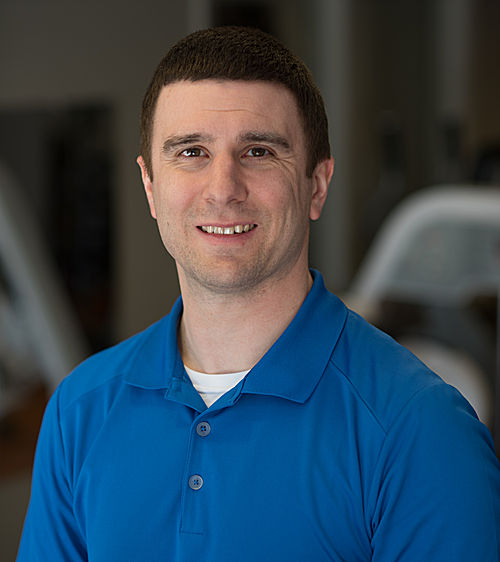
Andrew Hoppert, LAT, ATC, CMSS
Exercise Professional Education Instructor and Course Co-Creator
Andrew Hoppert earned his Bachelor of Science degree in Athletic Training from Concordia University Wisconsin in 2009. Shortly after his undergraduate studies, Andrew earned his certification and license as an Athletic Trainer (LAT,ATC). He also earned his personal training certification from the American Council on Exercise (ACE). He then was able to have the knowledge and skill set to work with clients who have pain or an injury.
Andrew continually strives to improve upon his practice by continuing to improve on a more in-depth thought process and becoming more precise with his skill set. He completed the extensive Muscle System Specialist Course and earned his certification. As a result, he is able to evaluate, discover, and address low quality muscular contractions with great proficiency. He is then able to progress a client’s muscular system through an array of strategies.
Andrew opened Muscle Dynamics in 2016 and set out a goal to help all his clients to move, feel better and get stronger all at the same time. Andrew has experience working with all sorts of individuals ranging from all walks of life. Ranging from people who feel that they can’t exercise anymore to people who are confused on where to even start their exercise journey. He also works with elite athletes who are looking to take their game to the next level.
The Pre and Post Treatment Muscle Assessment Course is a great introduction to the philosophy and methodologies underpinning the full Muscle System Specialist Course. This course will share the thinking, strategies, and tactics necessary for an exercise professional to know if, when, and how to use exercise to assist someone with pain.
Here is what one student says about the course:
"I just want to express my gratitude for the work you've put into this course. It has
changed the way that I practice, and I am fortunate to have been able to attend.
Joey E.
Due to the COVID-19 restrictions we have modified the live one day course to a hybrid course meaning that the student will first do the on-line component via a Zoom meeting, facilitated by an approved instructor, and then need to go to an approved location and attend three hours of supervised practical instruction based on the content present ed in the course workbook.
Here are the approved locations and instructors for the practical experience:
Columbus, OH (Greg Mack and Charlie Rowe)
San Diego, CA (Hope Gaston)
New Market, Ontario, Canada (Bandon Green)
Houston TX (Dominick Nusdeu)
Austin, TX (Brandon O’Connor)
Naples, FL (Jay Weitzner)
Shelton, CT (Tim Livingston)
Woodinville, WA (Seattle) (Curtis Van Wyck)
Milwaukee, WI (Andrew Hoppert)
The course fee includes this practical experience.
The student is responsible for all travel and accommodation expenses to get to the practical component location.
 $395
Pre and Post Treatment Muscle Assessment
A Novel Approach to Improving Performance
Pre and Post Treatment Muscle Assessment
A Novel Approach to Improving Performance
By Greg Mack, ACE-CMES, CMSS and Andrew Hoppert, LAT, ATC, CMSS, ACE-CPT
Course Objectives:
1. Identify the dilemma of addressing patient subjective and objective problems with their body as local sensation being interpreted as a local problem, and therefore only a local treatment or solution is implemented.
2. Explore the hypothesis that there is a potential relationship between the quality of bio-motor control and the patient’s physical sensations.
a. Literature review regarding motor control and physical sensation.
3. Introduce new definitions and terms.
4. The patient reports unwanted sensations and/or reports and/or demonstrate unsatisfactory movement(s) before, during, or after a training session. How can a clinician rethink how to apply themselves in this situation and within their scope of practice?
Course Goals:
1. Learn new skills you can use to assess and possibly improve your patient’s bio-motor control quality following a treatment (e.g. ultrasound, e-stim, massage, ice, dry needling, stretching, etc.).
2. Contextualize the use of exercise and its potential to impact on individual sensations like pain.
3. Create an open dialogue, share new ideas, and innovative ways to approach rehabilitation.